Mac4Me: The next step
November 2025 – Online

Program and recordings
Biomedicine/Macrophages
What (really) is a macrophage? – Andreas Weigert, University of Heidelberg
Reprogramming macrophages for therapeutic benefit – Maija Hollmen, Faron Pharmaceuticals
Translation/Entrepreneurship
Bringing Innovation to the market: Building a Successful Life Science Venture – Maurizio Aiello, React4Life
Transferring research to industry: It’s a marathon, not a sprint – Nadine Schmieder-Galfe, Zellmechanik Dresden
Public and Patient Involvement
From research to relevance – Gema Revuelta & Carolina Llorente (UPF), Hub Zwart (EUR), Amanda McCann & Elaine Quinn (PVCR)
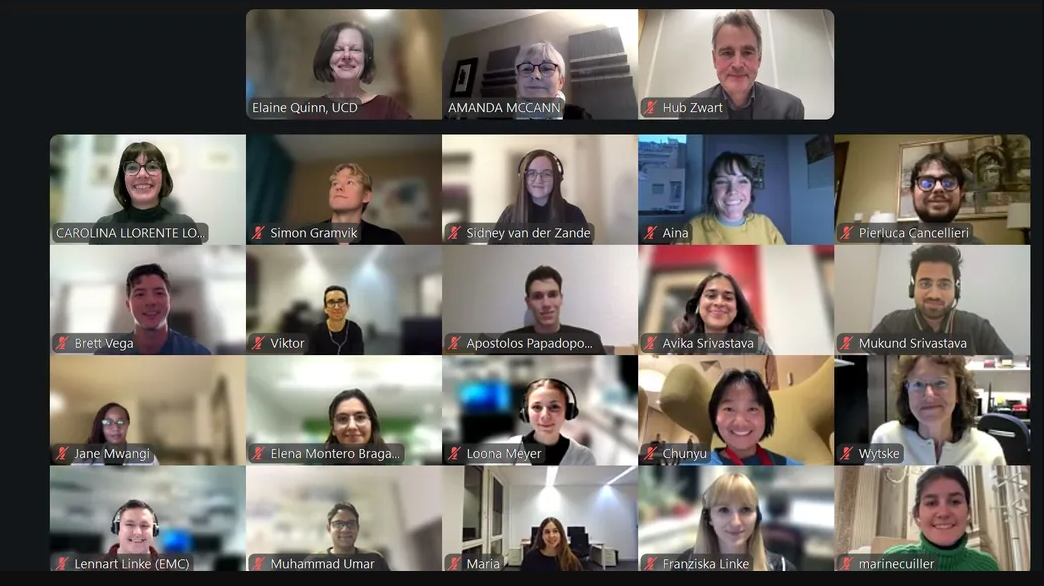
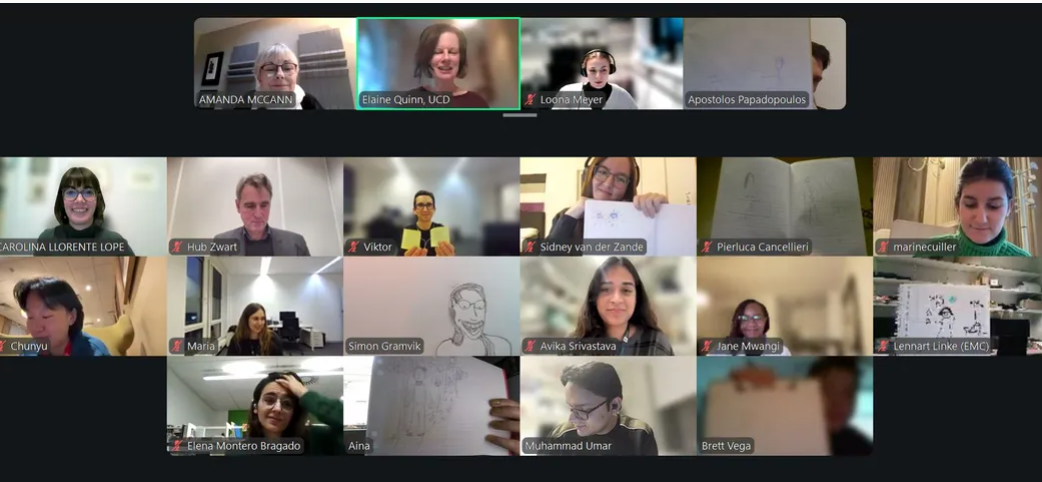
This training focused on equipping young researchers with the essential skills to communicate their complex work effectively to diverse professional and public audiences.
Phase 1: Understanding the Audience
The session began with a critical foundation on audience and epistemological inclusion. This ensures researchers understand the necessity of respecting and addressing diverse forms of knowledge and ways of knowing when sharing their work.
Phase 2: Adapting the Message
The core objective was to help doctoral candidates translate their work clearly, relevantly, and accessibly to groups ranging from clinical professionals and policymakers to industry partners and the general public.
We provided guidance on how to adapt a scientific message without compromising its rigor. Participants worked in small groups to transform their research descriptions into tailored messages. Using digital tools like Padlet, they received immediate feedback and saw firsthand how a single scientific idea requires strategic adaptation for different readers.
“The goal is not to simplify, but to translate the meaning. Making science understandable is a way of making it more useful and more human.” — Carolina Llorente
Phase 3: Crafting Compelling Summaries
The final segment focused on making research relatable and action-oriented. Participants learned techniques for writing impactful, plain-language summaries (moving beyond the concept of “lay abstracts”). The emphasis was on adapting abstracts so readers can understand and act on the information, rather than assuming a lack of knowledge. Dynamic exercises included applying metaphors—for example, explaining one’s research through the lens of another person’s hobby.
Impact Sequence: We emphasized the key communication flow useful to write plain-language summaries:
- Why We Care (Context/Problem)
- What We Found (Research/Findings)
- So What? (Impact/Significance)
- Now What? (Next Steps/Call to Action)
Technology/Matrix-GAG
Glycosaminoglycans: how complex can complex carbohydrates be? – Cathy Merry, University of Nottingham
Deconstructing Cancer Ecosystems: The Matrix Perspective – Thomas Cox, Garvan Institute of Medical Research